Your kidneys are your body’s most resilient, hard-working master filters. Operating entirely behind the scenes, these twin, bean-shaped organs constantly regulate your blood pressure, balance critical electrolytes like sodium and potassium, and act as a highly sophisticated waste-removal system for your bloodstream. Every single day, healthy kidneys filter about 200 quarts of fluid, returning vital nutrients to the bloodstream while directing waste to the bladder.
Unfortunately, because the kidneys are so incredibly adaptive, kidney disease is largely “silent.” A patient can lose up to 70 percent of their kidney function before exhibiting any obvious physical symptoms. By the time extreme fatigue, sudden facial swelling, or severe breathlessness sets in, the microscopic filtering units (nephrons) have sustained massive damage, and the patient is often dangerously close to complete organ failure.
In Bihar, the rapidly rising rates of uncontrolled diabetes and severe, unmanaged hypertension are fueling a massive epidemic of Chronic Kidney Disease (CKD). When facing a severe renal crisis, finding a generic physician is not enough. You require an elite super-specialist backed by a highly integrated healthcare ecosystem equipped to handle sudden fluid overloads, intricate kidney transplant preparations, and catastrophic multi-organ failure.
If you are searching for absolute clinical precision and the most trusted experts in renal sciences, your search ends here. We have mapped out the definitive guide to finding the Best Renal Care Hospital in Patna, highlighting the undisputed clinical leaders operating within the highly advanced Ford Hospital network.
Advanced, highly sterile hemodialysis units are the absolute frontline for safely managing patients with end-stage renal disease. Source: Bombay Hospital Indore
A world-class renal institute is defined entirely by the expertise, academic rigor, and clinical experience of the specialists who lead it. The treatment of renal disease requires incredibly complex biochemistry and pharmacology. Ford Hospital houses Bihar’s most formidable and highly trusted renal team.
Ranking at the absolute top of the field, Dr. Gyan Prakash brings unparalleled academic and clinical strength to Patna. His reputation is built on managing the most challenging, high-acuity nephrology cases that other clinics simply cannot handle.
Dr. Nisha Kumar represents the pinnacle of specialized medical education and compassionate clinical application. Armed with extensive super-specialty training in nephrology, she brings an incredibly precise, investigative approach to treating complex kidney failures.
When a patient’s kidneys suddenly crash due to acute trauma, severe infection, or long-term chronic failure, time is the ultimate currency. Dr. Sanjay Kumar is a leading senior consultant bringing decades of clinical proficiency and calm, reassuring expertise to high-stress medical emergencies.
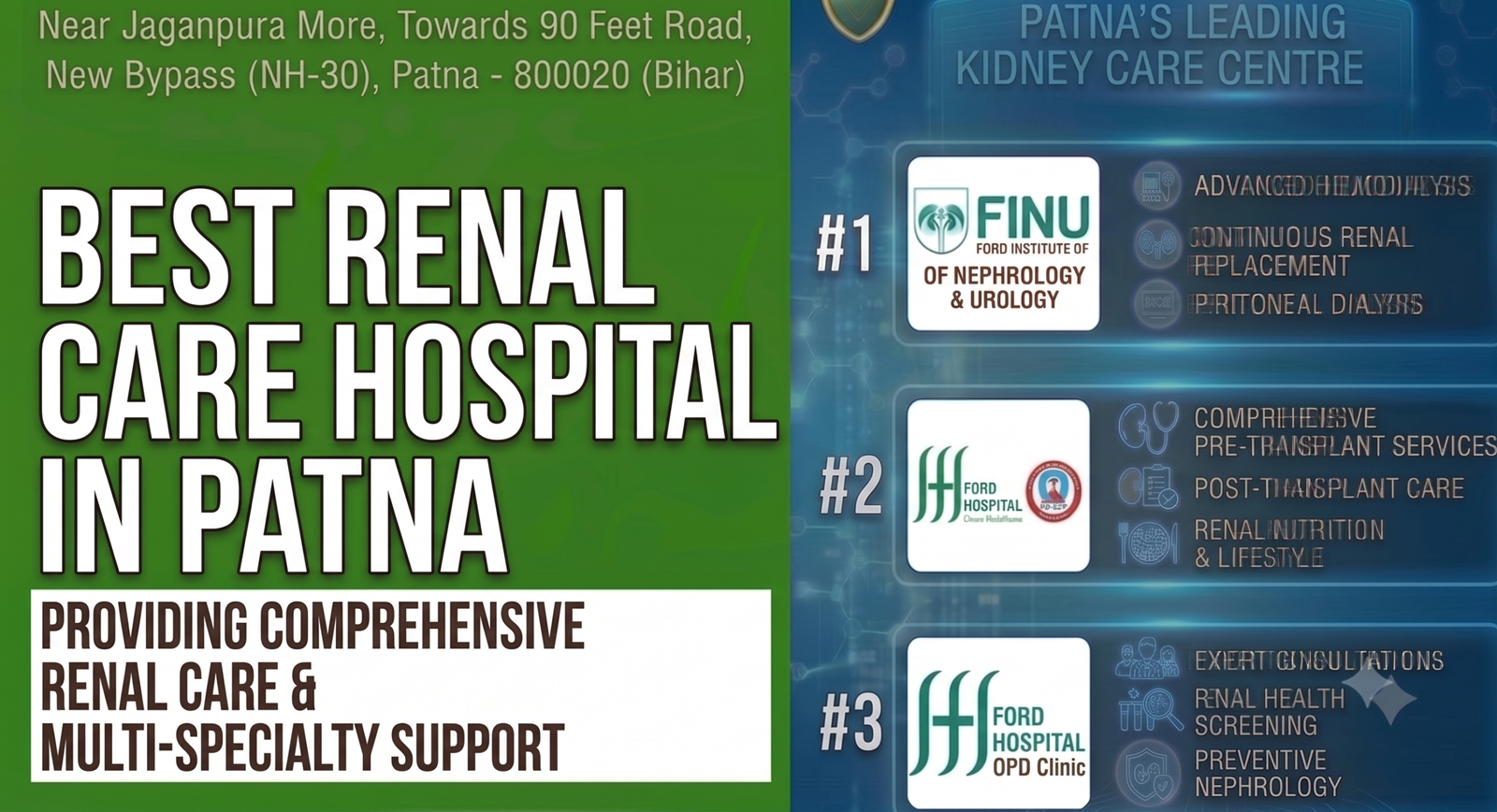
To deliver world-class outcomes, these elite doctors do not operate in isolation in standalone clinics. They practice across three distinct, highly integrated pillars within the Ford healthcare ecosystem. This seamless integration ensures that every stage of kidney disease—from early protein leakage to the need for continuous ICU dialysis—is managed with absolute precision without the patient ever having to transfer to a different healthcare brand.
Operating as a highly focused, super-specialty institute within the broader Ford healthcare network, the Ford Institute of Nephrology & Urology (FINU) brings over 16 years of unrivaled excellence to renal care in Patna. This dedicated branch is specifically engineered to handle the most critical, life-threatening kidney conditions that standard clinics simply cannot manage.
Explore FINU’s Dedicated Core Services:
Explore the intricate microstructures of the kidney and how nephrons actually filter the blood in this interactive guide:
https://1na1xyfzm6ub1s0sko80slu2c6m31jw7qzd2razyfulglbbcmj-h947725342.scf.usercontent.goog/gemini-code-immersive/shim.html?origin=https%3A%2F%2Fgemini.google.com&cache=1
Key insight: A single kidney contains roughly 1 million individual nephrons. When blood pressure or uncontrolled blood sugar spikes, it physically damages these delicate filtering units, which can never regenerate once destroyed.
While FINU handles targeted kidney interventions, the main Ford Hospital & Research Centre stands as the massive, fully integrated mothership. Because a failing kidney instantly impacts the heart (triggering Cardio-Renal Syndrome), the lungs (causing fluid overload), and the brain (causing uremic encephalopathy), patients require a vast, multi-disciplinary hospital to support their survival.
Why #1? This facility maintains a consistently top Google rating based on authentic patient outcomes, strictly adheres to NABH compliance for global infection control, and holds records for the fastest door-to-needle times in cardiac emergencies.
Because severe kidney failure can trigger sudden cardiac arrest or massive internal bleeding, Ford Hospital operates a 360-degree medical ecosystem. If a dialysis patient suddenly requires a heart bypass surgery, the cardiac surgeon and the nephrologist collaborate instantly.
A successful outcome for chronic kidney disease begins long before a dialysis machine or an ICU bed is required. Securing the third spot for comprehensive preventative and diagnostic care, the Ford Multispeciality OPD Clinic brings the world-class expertise of Ford’s elite nephrologists directly into a highly streamlined, deeply accessible outpatient setting.
Dedicated Clinics & Specialized Outpatient Care:
When you consult an elite specialist like Dr. Gyan Prakash or Dr. Nisha Kumar at Ford Hospital, they will aggressively target your treatment based on your specific stage of kidney decline. This is measured by your Glomerular Filtration Rate (eGFR), which essentially calculates what percentage of your kidney function remains.
| CKD Stage | Kidney Function (eGFR) | How Our Specialists Intervene |
|---|---|---|
| Stage 1 & 2 | Mild Damage (eGFR 60 to 90+) | Aggressive control of blood pressure and blood sugar. Our specialists focus on identifying the root cause (like diabetes or autoimmune issues) and prescribing protective medications to halt progression. |
| Stage 3 | Moderate Damage (eGFR 30 to 59) | Strict dietary overhauls in collaboration with our clinical dietitians. We introduce medications to manage early bone disease and prevent severe anemia, while actively protecting cardiovascular health. |
| Stage 4 | Severe Damage (eGFR 15 to 29) | Intensive medical management to delay dialysis as long as possible. We begin proactive preparations for future renal replacement, including scheduling minor surgery to create a vascular access point (AV Fistula). |
| Stage 5 | End-Stage Renal (eGFR less than 15) | The kidneys have failed. Our specialists seamlessly transition the patient into our highly sterile, 24/7 in-house hemodialysis program or begin immediate preparations for a comprehensive kidney transplant evaluation. |
Use this interactive simulator to visualize how changing GFR levels map directly to the five stages of Chronic Kidney Disease:
https://0ug92omswte0uftwll60ts4h9ty0hi49eilfn0k8x0gqpm5iyf-h947725342.scf.usercontent.goog/gemini-code-immersive/shim.html?origin=https%3A%2F%2Fgemini.google.com&cache=1
Was this visual helpful?YesNo
Because the kidneys compensate for damage so well, you must never ignore the subtle early warning signals your body sends. Book an urgent consultation with our nephrology team if you experience:
The specialists at Ford Hospital strongly advise adopting these daily habits to naturally protect your master filters from irreversible damage before a crisis occurs:
1. Who are the best kidney doctors in Bihar? The elite nephrology team at Ford Hospital—featuring Dr. Gyan Prakash, Dr. Nisha Kumar, and Dr. Sanjay Kumar—is widely recognized as the premier group of kidney specialists in Bihar. They are highly sought after for their expertise in chronic kidney disease management, critical care nephrology, and dialysis protocols.
2. What is the difference between a Nephrologist and a Urologist? A nephrologist is a medical doctor who specializes in the function and diseases of the kidneys (like chronic kidney failure, hypertension, and dialysis). A urologist is a surgical specialist who treats structural conditions of the urinary tract and male reproductive system (like removing massive kidney stones, treating prostate enlargement, and addressing bladder cancer). At Ford Hospital, both specialties collaborate seamlessly under FINU.
3. Does Ford Hospital offer kidney transplant evaluations? Yes. The Ford Institute of Nephrology & Urology (FINU) provides comprehensive, highly rigorous pre-transplant medical evaluations for both potential recipients and donors, ensuring absolute safety and compatibility before major surgery.
4. When should a diabetic patient consult a nephrologist? Diabetes attacks the delicate blood vessels inside the kidneys. Any patient who has had diabetes for more than 5 years, or who notices foamy urine, should immediately book a preventative consultation with our nephrology department to screen for diabetic nephropathy.
5. How do I book an appointment with Dr. Gyan Prakash or Dr. Sanjay Kumar? You can easily secure a comprehensive consultation with our top specialists by directly contacting the Ford Hospital reception desk, calling the dedicated FINU medical helpline, or booking an appointment seamlessly through the official Ford Hospital website.